Profile photo

Larry Lopez

Professor

Department of Forestry, Yamagata University

I graduated with the degree of Bachelor in Meteorology from the Faculty of Science, Universidad Nacional Agraria La Molina, Lima, Peru. From 1995 to 2003, with the sponsorship of MEXT (Ministry of Education and Sports of Japan), I joined the MSc and Ph.D. Program at the Graduate School of Environmental Sciences, Hokkaido University. Work Experience: 2003 to 2007, Post-doc at the Institute of Low Temperature, Hokkaido University. 2008 to 2011, Project Lecturer at the United Graduate School of Agricultural Sciences, Iwate University. 2011 to 2018, Professor in the Department of Forestry at the Faculty of Agriculture of Yamagata University. My research interest is on forest carbon, water and nutrient cycles and in recent years the use of Deep Learning to design more efficient and precise models to monitor forest ecosystems using UAV-acquired images.

Keywords: Forest health, Nitrogen cycle, Stable isotopes, Tree-rings, UAVs
Developing Modern Education

Large scale research can only be attained by strong cooperation with international partners, which highly contributes to global education and cultural understanding.

Internationalization in Higher Education

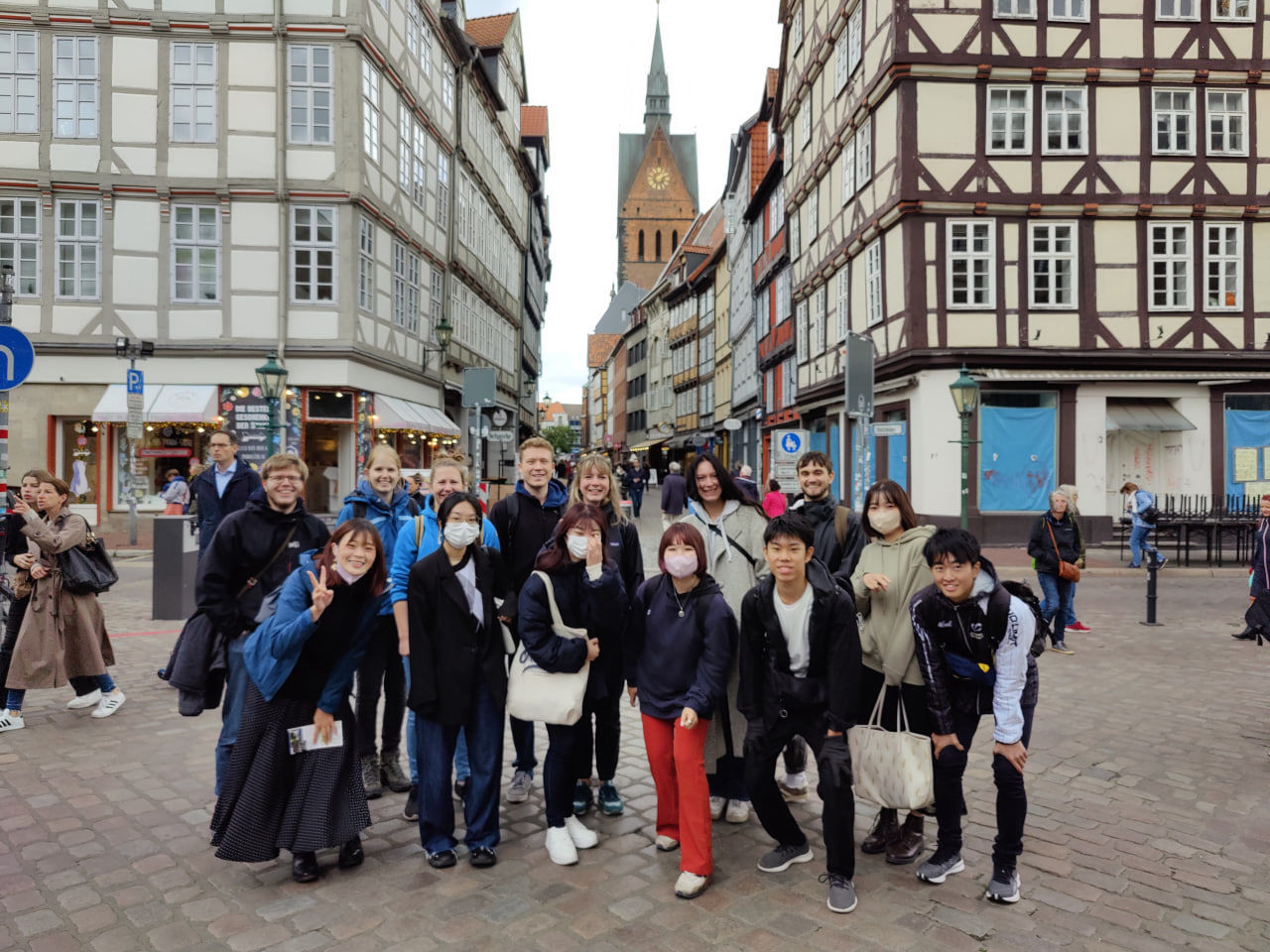
Universities all over the world recognized the value of multiculturalism and the contribution that internationalization has on the education of today. Thus, Internationalization has become an objective of universities all over the world. The methods used to attain this goal are multiple and they are not standardized. They might be more effective depending on the region where they are applied. Regardless of the approach, a common language is essential for communication and for academic activities. In the present world, courses or programs in English have opened universities in Europe and Asia that until now were difficult to access for students from all over the world. Double Degree Programs are the result of long-term international activities that are based on small steps that little by little helped to build the needed structure. Theseinnovative academic programs ensure sustainability of international activities and active exchange of students and faculty members from the participating universities.        

Artificial Intelligence for  Monitoring Forests

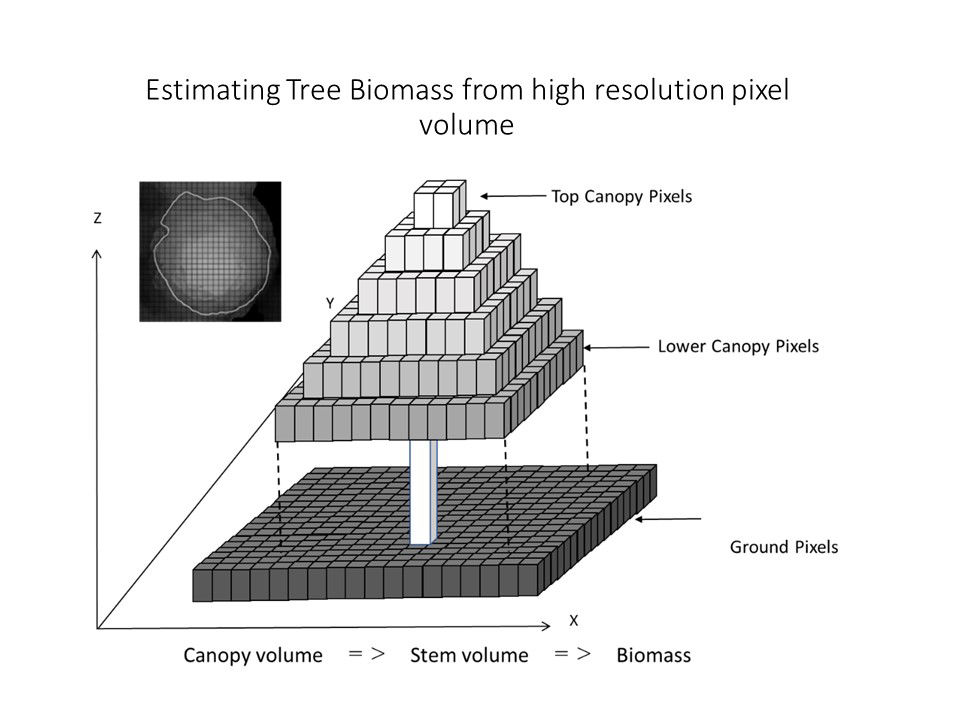
Artificial Intelligence is now being used in all science, commercial and social activities. In recent years, AI has also started to be applied in the field of forestry, especially after the use of UAVs has made it possible the capture of images with a very high resolution (pixel of 2 cm). This modern precise remote sensing technique allows forest scientist to "see the tree and the forest" at the same time. With this level of detail, images of needles, branches or canopy can be used to train Deep Learning Models that automatically identify tree and forest characteristics. This level of precision and dimensionwill be impossible to attain under field survey conditions. The labor cost of surveying large areas of forest and the difficulties of especially natural forest terrain, make this state-of=the=art approach not only practical but also economically efficient and highly accurate. There is still much research to be done in this field and through a multidisciplinary approach, we aim at developing sound forest management strategies.  

3D Printing as a tool for Environmental Education

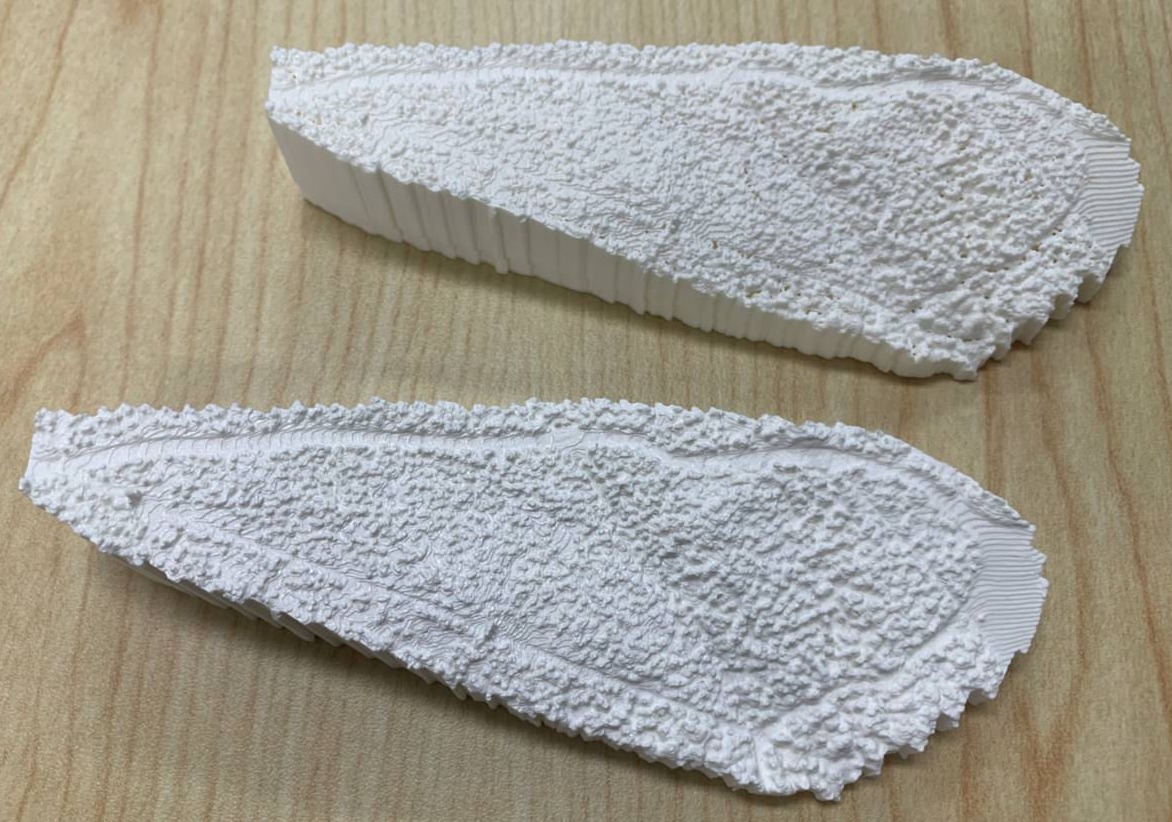
Until recently, the digital data available to print 3D models of terrains where limited by the availability of these data or by the resolution of the Digital Elevation Models (DEM), In the best case, at least in Japan you could download a 3 m x 3 m grid  data, that could be used to create large scale 3D Models. However, with the DEMs generated with UAV images, now it is possible to obtain 0.02 m x 0.02 m grids. These provides an incredible level of detail that provides a clear understanding of the topography of the terrain, such as slopes, forests covering the terrain and other characteristics that are not visible in two dimensional images and especially are not visible from field observations. It is an incredible tool for education since it allows the explanation of the site to students and visitors prior to field observations. Now we can literally say that 'we have forests and mountains on the palm of our hands'.